


The first time I listened to ‘Requiem For A Village’ I did it at night, on headphones and knowing little more than the title, and ten minutes in I was checking that the windows were shut. That isn’t rhetorical exaggeration. Steven Wilson has made a record that is genuinely frightening, not through volume or screaming but through the constant sense that something isn’t right in the place it describes, and that’s much harder to achieve with music than with images. After several days turning it over, I think it’s his strangest, riskiest and, for me, most enjoyable work since ‘Hand. Cannot. Erase.’, and coming from someone who has followed his career since the Porcupine Tree days, I don’t say that lightly.
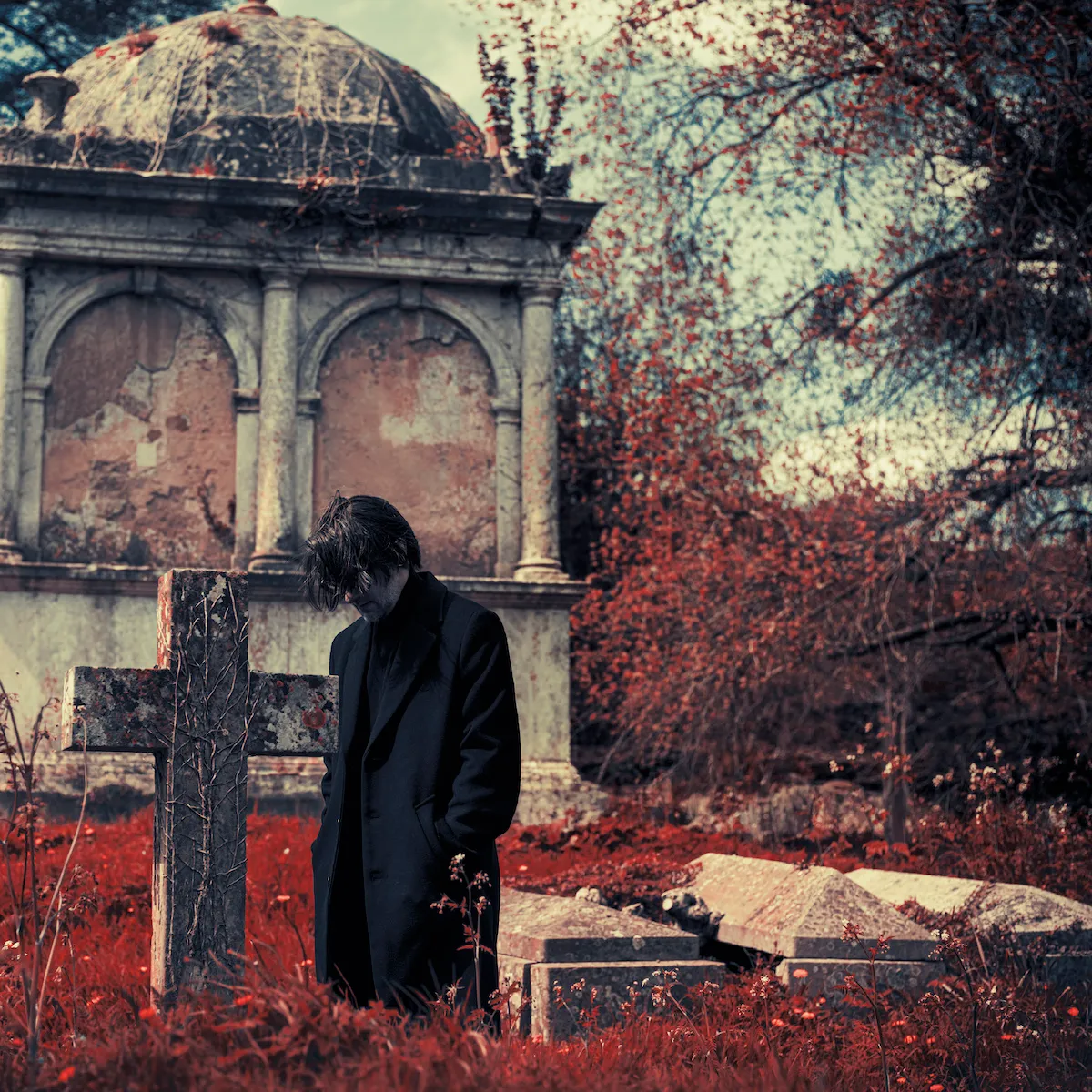
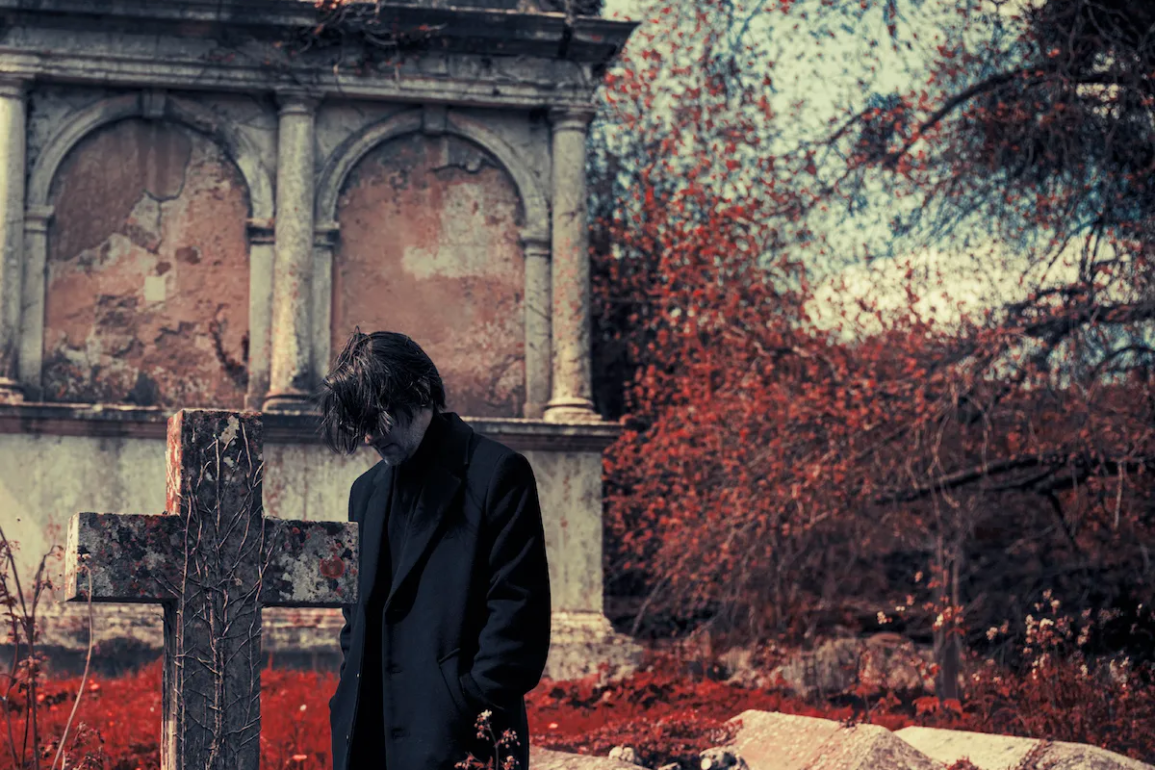
The change of direction is radical. Only a year ago, ‘The Overview’ gazed into deep space with two long suites of textbook progressive rock, polished down to the last detail. This ninth album does exactly the opposite: it stays on the ground, in an invented village lost somewhere in the British Isles, cut off from modern life, where the local gallery displays paintings by Stanley Spencer, the library keeps stories by M. R. James and Algernon Blackwood, and something very old seems to keep breathing under the grass. The title borrows that of a 1975 British film, and the aesthetic universe comes straight from seventies folk horror, from ‘The Wicker Man’ and ‘Children Of The Stones’, the children’s series Wilson himself remembers as an absolute classic and genuinely terrifying.
The most interesting thing is how it was made. Wilson recorded at his home studio in North London and chose to give up corrective technology, perfect tuning and any artificial intelligence tools, sticking with organic instruments, analogue synths, imperfect tunings and mistakes that, instead of being erased, became new directions. He plays violin, oboe, recorder and drums himself, instruments he hasn’t mastered, and he has explained that he wanted to get back to a kind of music where you can hear the metaphorical thumbprints. He’s joined by Randy McStine on guitars, lyre harp, mellotron and accordion, Russell Holzman on drums and, as guests, Adam Holzman on synths and Katherine Priddy on vocals. For someone as obsessed with sonic perfection as Wilson, this record is almost a confession.
Between songs comes the voice of David Tennant, narrating texts written by Andy Partridge of XTC. Wilson wanted a Scottish or Irish voice with gravitas, and his first choice was the poet Ivor Cutler, until he discovered Cutler had died. He ended up approaching Tennant after remembering a photo of the actor wearing a ‘The Raven That Refused To Sing’ T-shirt, and Tennant recorded the text while filming elsewhere and sent it back in under a day. I was afraid the narration would sound dated or theatrical, and at times it brushes that line, but it’s rationed very intelligently and its tone, halfway between a campfire tale and a parish sermon, gives the record the texture of a film for the ears.
‘Swirl In A Lark’s Eye’ opens with bells, almost conga-like percussion and Tennant’s voice introducing the village as if it were a living organism, and from there the album launches into the title track, which was the first single and which, I admit, threw me when it came out in September. Out of context it sounded like a Porcupine Tree leftover. Inside the album it makes complete sense: it starts with an unsettling slowness, gradually loads up with scratchy guitars and ends up exploding into almost funky drumming, a catchy bass riff and a chaotic guitar solo, with a weight that at moments reminded me of Black Sabbath doom. It’s eight minutes in which the village stops being a postcard and becomes a threat.
‘The Same River Twice’ lowers the intensity with spectral guitars, a melancholy vocal and strings that swirl around like mist, and ‘Now Departing’ is, for me, one of the album’s high points. It starts with a building piano, has a syncopated melody and shifts mood several times over seven minutes, and it’s one of the few songs where you can clearly hear the Porcupine Tree-era Wilson, heavy and progressive, though filtered through the odd atmosphere of the rest of the record. Then comes ‘Hiraeth’, a short and lovely piano and guitar instrumental whose title, a Welsh word for a longing that has no exact translation, sums up the mood of the whole album better than anything else.
‘On Chapel Slope’, the second single, is the song that has stayed in my head the most, and not always pleasantly. It starts with a bright, almost luminous vocal and halfway through falls into a sinister passage with a collective chant that sounds like a demonic procession and twangy guitars that seem to come from a cursed western. It’s the kind of shift that on another record would strike me as a gimmick, but here it works because the whole album is built on the idea that the beauty of the countryside hides something rotten.
‘Murmuration’ is the heart of the album and its most beautiful moment. It’s a mostly acoustic seven-minute piece, with fingerpicked guitars, mellotron rising in waves and Katherine Priddy’s voice intertwining with Wilson’s, and yet it never stops feeling like there’s a threat in the background, as if the birds of the title were about to form a shape we don’t want to see. It’s hypnotic, and it’s one of those songs where the decision to record with imperfections is fully justified, because those small misalignments make it sound human and fragile.
‘Cursus Fingerprint’, whose title seems to allude to the ancient Neolithic earthworks that dot the British landscape, is a short piece of tension, punctuated by a tom that strikes like a heartbeat. ‘A Basket Of Bees’ is the most seventies-sounding track on the album, with a 7/8 groove that recalls Jethro Tull, Caravan and Mike Oldfield, and a structure that moves from placid to frantic, with a rhythmic ferocity close to King Crimson that at times becomes almost cartoonish. ‘Great Green Map’ starts as a delicate piano waltz with a latent unease underneath and grows until it fills with layered backing vocals.

And then ‘Wheel’ shakes everything up. It’s the heaviest and most energetic song on the record, with fast, groovy riffs, a tense dialogue between bass and guitar, a long solo and stylish drumming from Holzman, and it’s probably my favorite. My only complaint is one of sequencing: it arrives late. After a magnificent but very restrained first half, there’s a stretch in the middle where the album is crying out for a jolt like this, and by the time it finally comes we’re close to the end. The closer, ‘The Old God Is Buried’, is two minutes of bells, discordant chords, echoing voices and collective chants that sound like a ritual, and it leaves the album suspended in a nightmare instead of resolving it.
It isn’t an easy album, and I think it’s important to say so. I needed several listens to get into it, the lead single may put some people off on the first pass, and there are deliberately murky parts, buried in the mix or played out of tune, that may sound careless to anyone expecting Wilson’s usual pristine finish. His falsetto still turns up, although here he uses it with more restraint and better judgment than on other records, and overall his singing is more contained, more whispered, which I think is exactly right for this material.
So far, the only live airing of this material came at two sold-out nights at London’s Royal Albert Hall on October 28 and 29, where Wilson premiered new songs alongside orchestral arrangements of ‘The Overview’ with the Parallax Orchestra and the SANSARA choir, and no tour to support the album has been announced. His last North American run came in 2025 with ‘The Overview’, his first tour of the continent in seven years. I find it hard to imagine how he’ll bring such an intimate, narration-dependent album to the stage, but if anyone knows how to turn a home studio into a spectacle, it’s him.
‘Requiem For A Village’ is a record to inhabit more than to listen to, a rural horror film without images in which every detail, a bell, a tuning error, a distant chant, ends up becoming part of the landscape. Wilson has spent years changing skins and not all of his transformations have convinced me, but this one has a coherence, a daring and an unsettling beauty I hadn’t heard from him in a long time. ‘Requiem For A Village’, ‘Now Departing’, ‘Murmuration’ and ‘Wheel’ are among the best things he has written in a decade, and although the album asks for patience and a little courage, it pays both back many times over.